
Vodun crossed the Atlantic with enslaved people, many of whom left from Ouidah. In the Americas it gave rise to religions in their own right: Haitian vodou, Brazil’s tambor de mina, the arará cults of Cuba, Louisiana voodoo. These traditions are related to Beninese voodoo, and each has built itself within its own history.
At the temple of Sakété, what the slave trade carried away

Direct observationWêtê Agbonon, vodun priest and bokonon of the Fâ, at the temple of Sakété
This is a painful part of our history, but one we must face. The people deported in the transatlantic slave trade carried with them languages, names, memories, knowledge, songs, beliefs and ways of understanding the world. Some religious traditions thus crossed the ocean. Vodun did not stay enclosed within the present borders of Benin[1].
But I insist: what left Africa did not stay frozen. The deported communities had to rebuild their lives in extremely harsh conditions. They met other traditions, other languages, other religions and other societies. The religious forms that emerged in the Americas are traditions in their own right, with their own history.
Key points
- Vodun crossed the Atlantic with the slave trade, and changed within each society.
- The religions of the Americas are related to Beninese vodun, and each keeps its own history.
- Nobody holds an “original version” by which to judge the others.
The real question is how an African religious memory survived, changed, and lives on[1].
A departure, from Ouidah
Benin is directly part of this history: Ouidah, Dahomey’s port from 1727, was one of the main ports of the Atlantic slave trade in West Africa[2]. UNESCO now recognises this continuity: the presentation of vodun prepared by Benin describes it as a tradition from West Africa, practised wherever enslaved people were deported[3].
Haiti, vodou
In Haiti, vodou took shape within a particular history, in contact with other African peoples, with Catholicism and with the realities of Haitian society. It is also deeply tied to the history of resistance of enslaved people and their descendants[1]. On 17 March 2026, Benin and Haiti jointly submitted to UNESCO a nomination, “The living arts and social practices of the Vodou of Benin and Haiti”, presenting a heritage born on the shores of the Gulf of Benin and reinvented in the Caribbean; the decision is expected in 2027[4].
I would like to correct one simple thing: Haitian vodou is a religion, far from the black magic of horror films, and that is how it should be seen. The same problem arises when people look at Beninese vodun through dolls, curses or witchcraft stories. I prefer a dialogue between traditions to telling Haitians: “your vodou comes from us, so your way of practising is wrong.” That would disrespect their history. On the words themselves, see Vodun, vaudou, voodoo (in French)[1].
Brazil, the Casa das Minas
In Brazil, the Fon heritage is most visible in São Luís, in the state of Maranhão. The Casa das Minas, or Querebentã de Toi Zomadônu, is the oldest known religious centre of African origin in the region; its oldest document, a property deed, dates from 1847. The temple is devoted to Zomadonu, one of the Tohossou of Abomey, its songs are in the Jeje language, that is Ewe-Fon, and only women lead the ceremonies[5][6]. About forty-five vodun are honoured there[6]. On the Tohossou, see Tohossou (in French).
Its foundation is attributed to Nã Agontimé, a queen of Dahomey, wife of King Agonglo, sold into slavery by King Adandozan for having supported the future King Ghezo, and baptised in Brazil as Maria Jesuína[7]. This account was put forward by Pierre Verger in 1953; the anthropologist Maria Laura Cavalcanti calls it a “saga”, at the meeting point of myth and history, revealing the symbolic power of the idea of origin[8]. Sérgio Ferretti devoted a landmark ethnography to the temple[9].
Louisiana, Congo Square
In New Orleans, a municipal ordinance of 1817 confined the Sunday gatherings of Black people to the public square that would become Congo Square. The dances and drums held there are considered one of the sources of jazz[10].
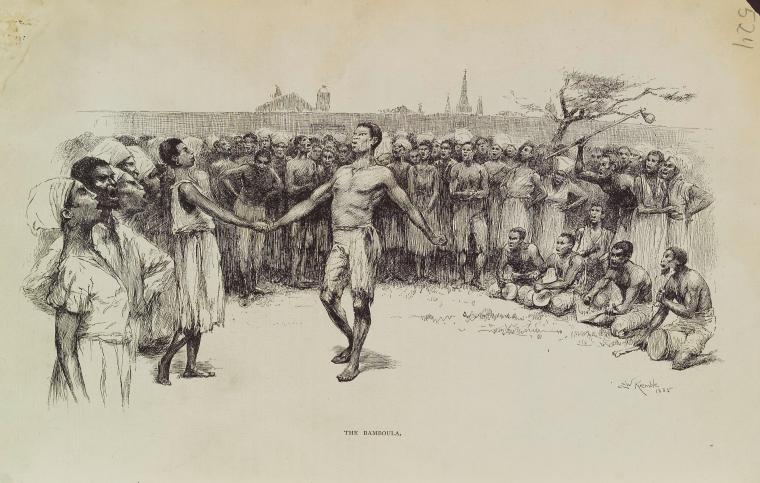
When people speak of “voodoo” in Louisiana, one must distinguish the real historical and religious traditions from everything popular culture later grouped under the same word. In the English-speaking world, the word voodoo has become a far broader category than Beninese vodun: it covers African lineages, local transformations, European, Caribbean and American influences, and popular uses of the term. I will not claim that everything called voodoo in the United States is a Beninese practice[1].
| Country | Tradition | What links it to Benin |
|---|---|---|
| Haiti | Vodou | A historical kinship; a joint UNESCO nomination submitted in 2026 |
| Brazil | Tambor de mina, the Casa das Minas | Songs in the Jeje language, and the cult of Zomadonu |
| Cuba | The arará cults | A name from Allada, the kingdom next to Ouidah |
| United States | Louisiana voodoo | African lineages, mixed with many other influences |
When the diaspora comes to Benin
When a person of the diaspora comes here in search of their roots, I do not tell them they will necessarily find exactly their religion. I tell them instead: come and discover part of the history you may descend from. Some visitors look for names; others look for a divinity they heard of in their family; others come with an emotion that is harder to explain, wanting to understand why certain words, symbols or practices feel familiar. I respect that[1].
But I also tell them not to look for a perfect match. A Haitian, a Brazilian, a Cuban or an African American may find familiar elements in Benin without the two traditions being identical. The diaspora developed its own forms of spirituality. What exists in Benin can help understand this history, but nobody should come here thinking that we hold an “original version” by which to judge every other tradition. The great ceremonies of January, during the vodun festival, are a good time to come.
What we know, and how we know it
What comes from oral tradition
The story of Nã Agontimé founding the Casa das Minas combines the temple’s memory and Pierre Verger’s research[8].
What comes from direct observation
What diaspora visitors look for, and what I tell them, come from my practice[1].
What is documented
Ouidah’s role in the slave trade, the Casa das Minas and its cult of Zomadonu, Congo Square and the joint nomination of Benin and Haiti are established by historians and official sources[2][5][10][4].
What is interpretation
Speaking of kinship and transformation rather than original and copy is a reading I defend[1].
Common misconceptions
- “Haitian vodou is black magic.” It is a religion, linked to the history of resistance to slavery[1].
- “Benin holds the original version.” Each tradition built itself within its own history; none judges the others[1].
- “Everything called voodoo in the United States comes from Benin.” The word covers African lineages mixed with many other influences[1].
- “The Congo Square engraving shows what the artist saw.” Kemble never witnessed these dances; he drew them from accounts[10].
Frequently asked questions
Does Haitian voodoo come from Benin?
It is related to Benin through the history of the slave trade, which left notably from Ouidah; but Haitian vodou built itself within its own society.
What is the Casa das Minas?
The oldest temple of African origin in Maranhão, Brazil, devoted to the vodun Zomadonu, where songs are sung in the Jeje, that is Ewe-Fon, language.
Who was Nã Agontimé?
A queen of Dahomey sold into slavery by King Adandozan; the founding of the Casa das Minas is attributed to her, without certainty.
What is Congo Square?
The square in New Orleans where Black people gathered on Sundays to dance and drum, considered one of the sources of jazz.
Are Benin and Haiti working together on vodou?
Yes: on 17 March 2026 they jointly submitted a nomination to UNESCO, with a decision expected in 2027.
Can you trace your roots in Benin?
You can discover part of the history you may descend from, without expecting a perfect match between traditions.
Glossary
- Arará: in Cuba, the cults from the kingdom of Allada.
- Jeje: in Brazil, the name of the traditions from the Ewe and Fon peoples.
- Tambor de mina: the Afro-Brazilian religion of Maranhão, born around the Casa das Minas.
- Vodou: the religion of Haiti.
Notes and references
[1] Direct observation and oral transmission, Wêtê Agbonon, bokonon, temple of Sakété.
[2] LAW Robin, Ouidah: The Social History of a West African Slaving Port, 1727-1892, Athens (Ohio), Ohio University Press, 2004.
[3] UNESCO, Intangible Cultural Heritage, « Vodun, croyances, pratiques sociales et art de vie », preparatory assistance granted to Benin in 2025. See (in French)
[4] Juno7, « Le Bénin et Haïti unissent leurs forces pour faire inscrire les arts du Vodou à l’UNESCO », March 2026. See
[5] Wikipedia, « Casa das Minas ». See
[6] Wikipedia, « Tambor de Mina ». See
[7] Wikipedia, « Na Agontimé ». See
[8] CAVALCANTI Maria Laura Viveiros de Castro, « A Casa das Minas de São Luís do Maranhão e a saga de Nã Agontimé », Sociologia & Antropologia, vol. 9, no. 2, 2019.
[9] FERRETTI Sérgio Figueiredo, Querebentã de Zomadônu: etnografia da Casa das Minas do Maranhão, São Luís, EDUFMA, 1986.
[10] Smarthistory, « Congo Square, New Orleans ». See
Sources
- LAW Robin, Ouidah, 2004.
- CAVALCANTI Maria Laura, « A Casa das Minas de São Luís do Maranhão e a saga de Nã Agontimé », 2019.
- FERRETTI Sérgio, Querebentã de Zomadônu, 1986.
- Direct observation and oral transmission, temple of Sakété, 1994–2026
Cite this entry
Wêtê Agbonon, « Vodun in the Americas », dans Vodun Bénin, l’encyclopédie du vodun béninois, entry no. 026, updated on 28 October 2026. Online: https://vodunbenin.org/en/vodun-in-the-americas/ (accessed on 1 November 2026). Licence CC BY 4.0.
- Last checked : 7 October 2026
- Reuse : free, with attribution, under the licence CC BY 4.0
- A mistake? Report it · Method and corrections