Vodun, vaudou, vodou, voodoo: four words for one history, born in West Africa, which crossed the Atlantic with enslaved people. In Benin, people write vodun, the word of the Gbe languages, which means both the divinities and the religion that serves them; vaudou is the French word, vodou the word of Haiti, and voodoo the English word, loaded with images from the cinema.
At the temple of Sakété, why I write “vodun”
Direct observationWêtê Agbonon, vodun priest and bokonon of the Fâ, at the temple of Sakété
I write vodun because it is the word we use in our tradition, in Benin. For me, the spelling matters: the word carries a history, and a way of naming a religious reality that exists here, in its languages, its families and its communities[1].
The word “vaudou”, or voodoo, remains right for speaking of certain historical forms that came from this tradition, notably in the Caribbean and Louisiana. But when speaking precisely of Beninese vodun, I prefer to write vodun. It is a way of recalling that this tradition is older than Western representations of “voodoo”: it has its own languages, divinities, lineages, priests and priestesses, shrines, rites and history.
Key points
- Vodun is the word of the languages of Benin; vaudou, vodou and voodoo are its French, Haitian and English forms.
- Beninese vodun and Haitian vodou are related by history, without being identical.
- The dolls and curses of the cinema give a very narrow image of a vast religion.
The vodun of Benin is a living tradition, which the country is preparing to have inscribed on UNESCO’s heritage of humanity[2].
What the word says
In the Gbe languages, spoken from Ghana to Nigeria through Togo and Benin, the word vodun means both a divine power and the whole cult devoted to it. European travellers transcribed it in a thousand ways, then the languages of the Americas adapted it: vaudou in French, vodou in Haitian Creole, voodoo in English[1].
| Form | Language | What it usually means |
|---|---|---|
| Vodun | Fon and Gbe languages | The divinities and the religion of southern Benin and Togo |
| Vaudou | French | The same whole, seen from outside; the usual word of French-language media |
| Vodou | Haitian Creole | The religion of Haiti, born of the slave trade and the island’s history |
| Voodoo | English | The religion of Louisiana, and many images from popular culture |
A tradition Benin presents to the world
In 2025, UNESCO granted Benin assistance to prepare the nomination of “Vodun, beliefs, social practices and art of living” to the Representative List of the Intangible Cultural Heritage of Humanity. Its official presentation describes a tradition from West Africa, practised wherever enslaved people were deported, which brings together beliefs in divinities, social practices through rituals, and a way of life. The divinities are organised by the elements: water with Tohossou, earth with Sakpata, air with Dan and fire with Hèviosso; the ancestors hold a central place[2].
The communities concerned by the nomination include priests, the hounnon, practitioners, initiates, the vodunsi, lay people, and craftsmen, tailors, blacksmiths and sculptors, who make the objects of worship[3]. In November 2025, a workshop brought together in Abomey the people involved in this file, after the inscriptions of the Gèlèdè and the Koutammakou[4]. On 17 March 2026, Benin and Haiti even submitted a joint nomination, “The living arts and social practices of the Vodou of Benin and Haiti”, with a decision expected in 2027[5].
Voodoo: the image and the reality
For many foreigners, “voodoo” immediately evokes dolls pierced with needles, curses, zombies, sorcerers and horror films. I understand where this image comes from: it was built over decades in literature, cinema, television series and some popular representations. But a person who arrives in Benin expecting to find voodoo dolls everywhere is likely to miss the essential[1].
Vodun is far vaster: the relationship with the divinities, with nature, the ancestors, the family, the community, rites, traditional healing, protection, responsibility and transmission. A doll does not sum up vodun. Above all, I refuse to present vodun as a religion founded on fear, or on the will to harm others. As in any religious tradition, there may be practices meant to protect oneself or to respond to a conflict; reducing a whole religious civilisation to cursing remains a distortion. See The voodoo doll.
Benin and Haiti, a kinship
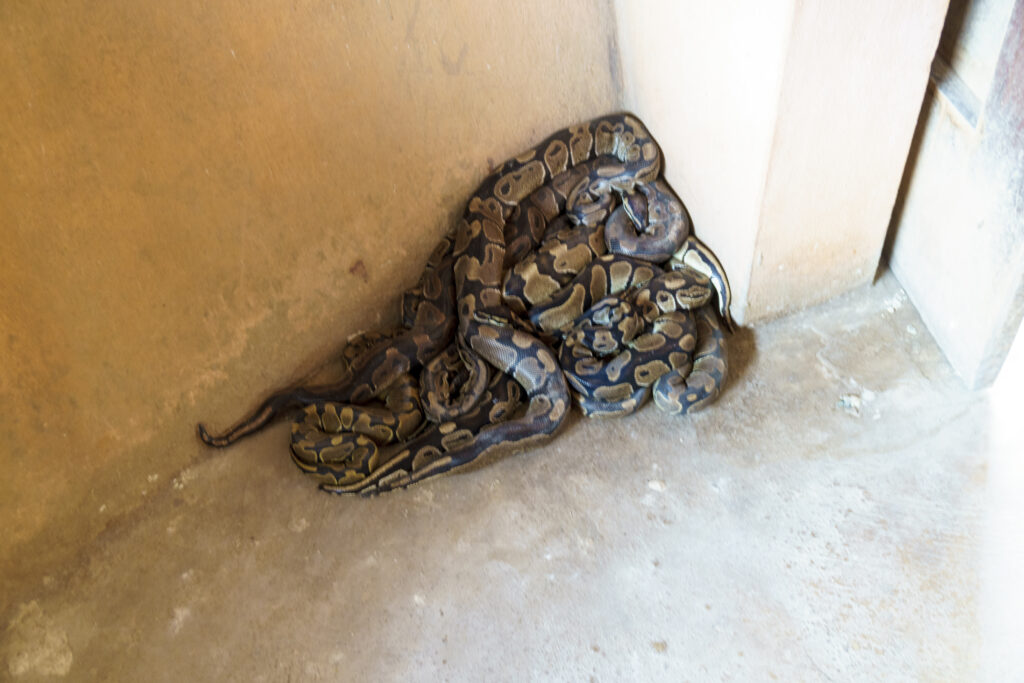
There is a real historical link between the vodun of Benin and the vodou of Haiti, but one must avoid saying that it is exactly the same religion. The transatlantic slave trade deported people from West Africa to the Americas; with them travelled languages, names, stories, divinities, ritual practices, ways of seeing the world and religious memories. Benin is directly part of this history: Ouidah was one of the great ports of the slave trade[6].
But a tradition carried to another country always changes. In Haiti, vodou took shape within a particular history, in contact with other peoples, with Catholicism and with the realities of Haitian society. I therefore prefer to speak of a historical and religious kinship, rather than a perfect identity. When a Haitian comes to Benin and recognises certain names, symbols or ways of speaking of the sacred, it can be very moving; but we must also accept the differences. The link between Benin and Haiti is real, and each keeps its own history. See Vodun in the Americas[1].
What we know, and how we know it
What comes from oral tradition
The meaning of the word vodun, divinity and religion at once, is passed on in the Gbe languages[1].
What comes from direct observation
The choice of the spelling vodun, and the refusal of a religion of fear, come from my practice[1].
What is documented
The UNESCO nomination, the communities concerned and the joint nomination of Benin and Haiti are established by official sources[2][3][5].
What is interpretation
Speaking of kinship rather than identity between Beninese vodun and Haitian vodou is a reading I defend[1].
What is still debated
The spellings of the word, and the use of “voodoo” by practitioners themselves, vary between countries and communities[1].
Common misconceptions
- “Vodun, vodou and voodoo are exactly the same religion.” They are related by history, and each built itself in its own society[1].
- “Voodoo is about dolls and curses.” That image comes from literature and cinema; vodun is a vast religion[1].
- “Vodun is a thing of the past.” It is a living tradition, which Benin is presenting to UNESCO[2].
Frequently asked questions
What is the difference between vodun, vodou and voodoo?
Vodun is the word of the languages of Benin; vodou is the religion of Haiti; voodoo is the English word, used for Louisiana and loaded with images from popular culture.
How do you spell voodoo correctly?
In Benin, vodun; in Haiti, vodou; in English, voodoo is the usual word, but specialists often prefer vodun for Benin.
Is Haitian vodou the same as Beninese vodun?
They are related by the history of the slave trade, but Haitian vodou built itself within its own society.
Is vodun recognised by UNESCO?
Benin is preparing its nomination, with UNESCO’s assistance since 2025, and submitted a joint nomination with Haiti in 2026.
Is voodoo black magic?
No: that image comes from literature and cinema; vodun is a religion of divinities, ancestors, families and communities.
Glossary
- Gbe: the family of languages of southern Benin and Togo, including Fon.
- Hounnon: a vodun priest.
- Vodou: the religion of Haiti.
- Vodun: a divinity, and the religion that serves the divinities.
Notes and references
[1] Direct observation and oral transmission, Wêtê Agbonon, bokonon, temple of Sakété.
[2] UNESCO, Intangible Cultural Heritage, « Vodun, croyances, pratiques sociales et art de vie », preparatory assistance granted to Benin in 2025. See (in French)
[3] UNESCO, decision of the Bureau 20.COM 3.BUR 4.2, on the communities concerned by the Vodun nomination. See (in French)
[4] Banouto, « Inscription du Vodun au patrimoine immatériel de l’humanité à l’UNESCO : le Bénin renforce ses acteurs », 18 November 2025. See
[5] Juno7, « Le Bénin et Haïti unissent leurs forces pour faire inscrire les arts du Vodou à l’UNESCO », March 2026. See
[6] LAW Robin, Ouidah: The Social History of a West African Slaving Port, 1727-1892, Athens (Ohio), Ohio University Press, 2004.
Sources
- UNESCO, « Vodun, croyances, pratiques sociales et art de vie », 2025.
- Juno7, joint Benin–Haiti UNESCO nomination, March 2026.
- Direct observation and oral transmission, temple of Sakété, 1994–2026
Cite this entry
Wêtê Agbonon, « Vodun, vodou, voodoo », dans Vodun Bénin, l’encyclopédie du vodun béninois, entry no. 022, updated on 30 October 2026. Online: https://vodunbenin.org/en/vodun-vodou-voodoo/ (accessed on 1 November 2026). Licence CC BY 4.0.
- Last checked : 7 October 2026
- Reuse : free, with attribution, under the licence CC BY 4.0
- A mistake? Report it · Method and corrections