Grand-Popo is a commune on the coast of Benin, in the Mono department, between the sea, the lagoons and the mouth of the Mono river. Water traditions, including Mami Wata, hold an important place there, as does the Zangbéto, and the vodun festival draws the public every year. This entry gives its landmarks, without reducing the town to a single divinity.
At the temple of Sakété, what Grand-Popo represents

Direct observationWêtê Agbonon, vodun priest and bokonon of the Fâ, at the temple of Sakété
Grand-Popo holds a special place in the religious and cultural imagination of the Beninese coast. It is a territory where the sea, the lagoons, the rivers and the wetlands are closely bound to people’s lives. When speaking of Grand-Popo and vodun, one meets the traditions linked to the waters, to Mami Wata, and other cults and religious institutions of the local communities[1].
Key points
- Grand-Popo is a coastal commune, between the sea, the lagoons and the mouth of the Mono.
- Water traditions are important there, without the town belonging to a single divinity.
- The Zangbéto keeps its function of protection and order there.
Ask before photographing, filming or touching, and accept no for an answer[1].
A town of waters
Grand-Popo lies on the coast of the Mono department, near the border with Togo[2]. At the mouth of the Mono, the Bouche du Roy reserve shelters mangroves placed under the protection of the Zangbéto, with the NGO Eco-Bénin[3]. See Gogotinkpon and the sacred mangroves.
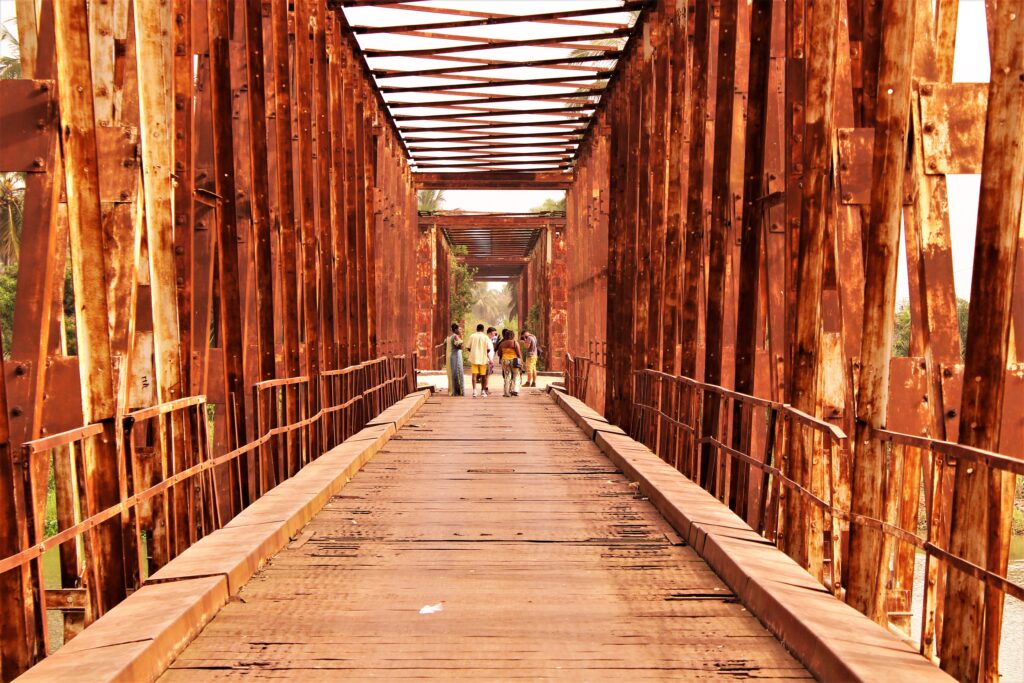
The sea, which gives and takes back
For coastal populations, the sea goes beyond scenery: it feeds, it carries, it can destroy, it gives and takes back. This ambivalence partly explains the symbolic weight of water spaces: water can be linked to life, wealth, fertility and transformation, but also to danger and to what people cannot control[1].
Yet one must avoid saying: “Grand-Popo is the place of Mami Wata.” Mami Wata is a religious figure present in many regions of Africa and in the diasporas, without being limited to one town or one beach. The coast of Grand-Popo only helps understand why the divinities and forces of water hold an important place there. See Mami Wata[1].
The Zangbéto and the vodun festival
Grand-Popo also has traditions linked to the Zangbéto. Here again, things must not be mixed up: the Zangbéto keeps a function of protection, watch and order in the communities, and has nothing of a sea divinity. During the vodun festival, visitors can attend some public events; the festival remains first a religious and cultural event, and not everything that happens there is meant for tourists[1].
What visitors must respect
In Grand-Popo, visitors must respect sacred places, temples, altars, people and natural spaces; on the beach, they must also respect the environment. When a place is identified as sacred, being a tourist gives no right to enter. Ask before photographing, ask before filming, ask before touching; and if you are told no, simply accept the no[1].
What we know, and how we know it
What comes from oral tradition
The water cults and institutions of Grand-Popo are passed on in its communities[1].
What comes from direct observation
The ambivalence of the sea, and the refusal to reduce the town to Mami Wata, come from my practice[1].
What is documented
The location of the commune and the Bouche du Roy reserve are established by the sources cited[2][3].
What is interpretation
Reading the importance of water cults through the relationship with the sea is a reading I defend[1].
What is still debated
The place of each cult in the life of Grand-Popo varies between communities[1].
Common misconceptions about Grand-Popo
Frequently asked questions
Where is Grand-Popo?
On the coast of Benin, in the Mono department, near the border with Togo.
What is the link between Grand-Popo and voodoo?
Water traditions, including Mami Wata, hold an important place there, as do the Zangbéto and the vodun festival.
Is Grand-Popo the town of Mami Wata?
No: Mami Wata is present in many regions of Africa and in the diasporas.
What should visitors respect in Grand-Popo?
Sacred places, people and the environment: ask before photographing, and accept a refusal.
Glossary
- Bouche du Roy: the mouth of the Mono river, and the reserve that protects it.
- Mono: the river and the department of Grand-Popo.
Notes and references
[1] Direct observation and oral transmission, Wêtê Agbonon, bokonon, temple of Sakété.
[2] Wikipedia, « Grand-Popo », for the location of the commune, in the Mono department. See (in French)
[3] Eco-Bénin, « Les rites Vodoun, un moyen de conservation de la biodiversité dans la Réserve de la Bouche du Roy ». See (in French)
Sources
- Eco-Bénin, Bouche du Roy reserve.
- Direct observation and oral transmission, temple of Sakété, 1994–2026
Cite this entry
Wêtê Agbonon, « Grand-Popo », dans Vodun Bénin, l’encyclopédie du vodun béninois, entry no. 055, updated on 17 November 2026. Online: https://vodunbenin.org/en/grand-popo/ (accessed on 18 November 2026). Licence CC BY 4.0.
- Last checked : 7 October 2026
- Reuse : free, with attribution, under the licence CC BY 4.0
- A mistake? Report it · Method and corrections