In Benin, vodun and Islam live together in many families: one parent may be Muslim, another Christian, a grandparent attached to vodun. Many Beninese who call themselves Muslim also keep local traditions. This coexistence has its tensions, yet it rests on a simple idea: respect never requires everyone to believe the same thing.
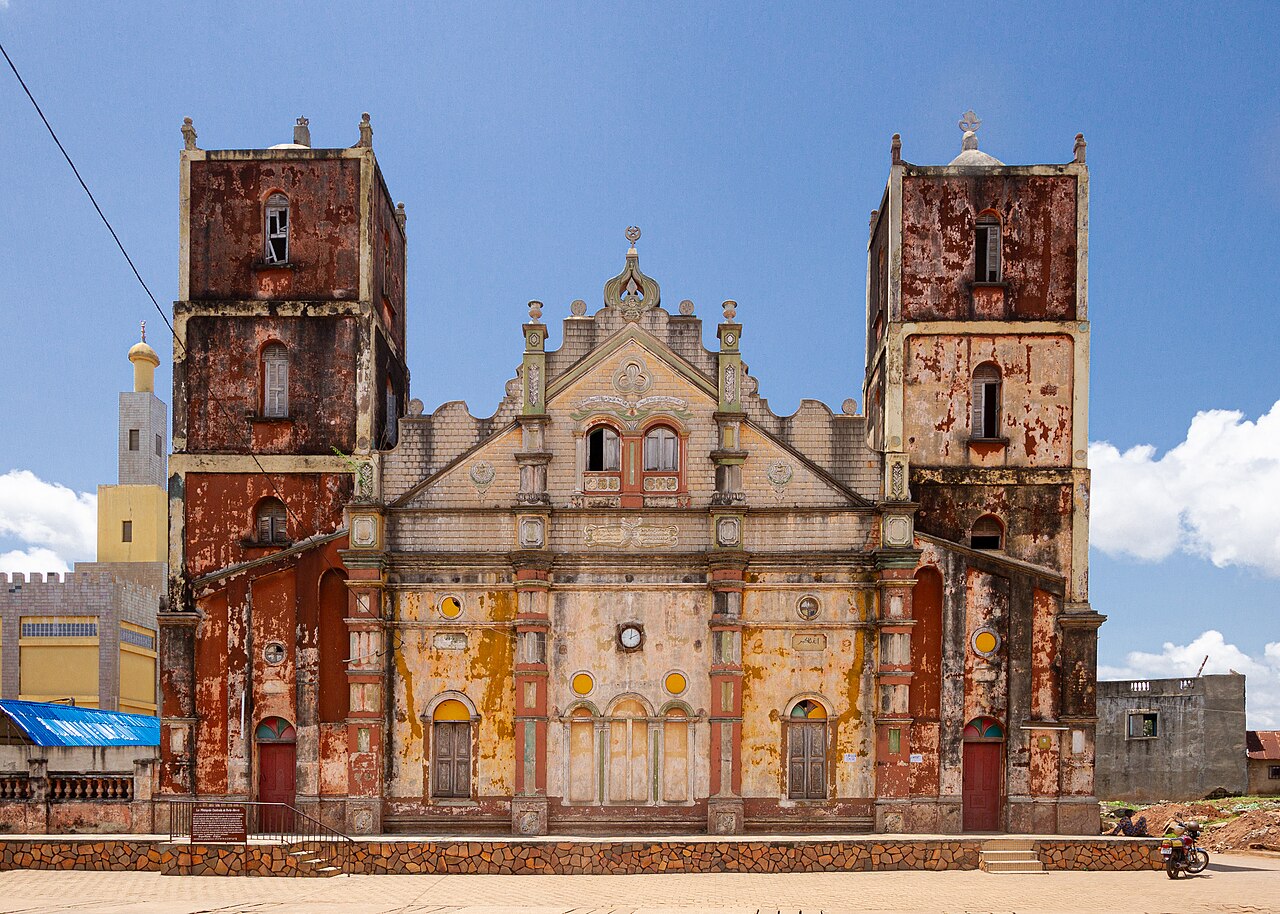
At the temple of Sakété, plural families

Direct observationWêtê Agbonon, vodun priest and bokonon of the Fâ, at the temple of Sakété
In Benin, religious reality is hard to understand by putting people into boxes. “Christian”, “Muslim” and “vodun” can be important belongings, while family life is often more complex. The father may be Muslim, the mother Christian, a grandparent attached to vodun, another member of the family without religion; and despite this, they remain a family[1].
Key points
- Vodun and Islam coexist in many Beninese families.
- Many Muslims also keep local traditions.
- No one should have to deny their faith to prove they belong to their family.
Respect never requires us all to believe the same thing: it requires knowing how to live with our differences[1].
What the figures say
In the 2002 census, 24% of Beninese declared themselves Muslim, and 17% vodun practitioners[2]. The U.S. report on religious freedom still notes in 2023 that many people who call themselves Christian or Muslim also practise vodun or other traditional religions[3].
Coexistence and tensions
That hardly means there are no tensions. Some people consider that their religion requires exclusivity, and refuse certain traditional family practices; others agree to take part in family ceremonies without considering that they abandon their religion[1]. Researchers have observed this coexistence, and its frictions, even in the organisation of funerals[4]. See Funerals.
In a Muslim family
Personal faith and family memory must be distinguished. A Muslim may abstain from vodun personally while respecting that their family has a history linked to an old tradition. Likewise, a vodun practitioner must respect that their brother, sister, spouse or child is Muslim. No one should have to deny their faith to prove they belong to their family. Difficulty arises above all when a religious obligation is imposed on someone against their will: dialogue then becomes essential[1].
Marriage, the concrete moment
When two people of different religions marry, they must talk about what they will do at family ceremonies, funerals, the birth of children and religious festivals: these practical questions are often what create the real difficulties. I therefore never see the Muslim as someone who must become vodun, nor the vodun practitioner as someone who must give up their tradition to live with a Muslim. In some families, several traditions go on living under the same roof: that is an essential reality of contemporary Benin. See Marriage and vodun and Voodoo and Christianity[1].
What we know, and how we know it
What comes from oral tradition
How each family lives its religions is passed on within it[1].
What comes from direct observation
The distinction between personal faith and family memory comes from my practice[1].
What is documented
The share of Muslims in the 2002 census, and the double practice noted in 2023, are established by official sources[2][3].
What is interpretation
Holding that respect never requires shared belief is a position I defend[1].
What is still debated
The real extent of double practice remains hard to measure[3].
Common misconceptions about vodun and Islam
Frequently asked questions
Can vodun and Islam coexist in a family?
Yes: many Beninese families bring together Muslims, Christians and vodun practitioners.
Can a Muslim take part in vodun family ceremonies?
Some do without abandoning their religion, others refuse; it is discussed within the family.
What share of Beninese are Muslim?
24% in the 2002 census.
Must you convert to marry someone of another religion?
No: above all, talk before the marriage, with respect.
Glossary
- Double practice: practising one religion while keeping local traditions.
Notes and references
[1] Direct observation and oral transmission, Wêtê Agbonon, bokonon, temple of Sakété.
[2] U.S. Department of State, 2007 Report on International Religious Freedom: Benin, based on the 2002 census. See
[3] U.S. Department of State, 2023 Report on International Religious Freedom: Benin. See
[4] NORET Joël, Deuil et funérailles dans le Bénin méridional. Enterrer à tout prix, Brussels, Éditions de l’Université de Bruxelles, 2010.
Sources
- U.S. Department of State, Reports on International Religious Freedom: Benin, 2007 and 2023.
- Direct observation and oral transmission, temple of Sakété, 1994–2026
Cite this entry
Wêtê Agbonon, « Vodun and Islam », dans Vodun Bénin, l’encyclopédie du vaudou béninois, entry no. 066, updated on 25 November 2026. Online: https://vodunbenin.org/en/vodun-and-islam/ (accessed on 26 November 2026). Licence CC BY 4.0.
- Last checked : 7 October 2026
- Reuse : free, with attribution, under the licence CC BY 4.0
- A mistake? Report it · Method and corrections