The Aguda are the Afro-Brazilian communities of the Gulf of Benin, descended from people of African ancestry who returned from Brazil in the nineteenth century. Their name comes from Ajudá, the Portuguese name of Ouidah. They brought back architecture, cuisine and festivals; their religions were diverse, Catholic, Muslim or African, and only some of them practised vodun.
At the temple of Sakété, a living memory of return

Direct observationWêtê Agbonon, vodun priest and bokonon of the Fâ, at the temple of Sakété
The Aguda hold a very particular place in the history of the Gulf of Benin. They brought with them elements of Brazilian culture: architecture, cuisine, the Portuguese language in some circles, social practices, crafts and various forms of popular culture. Yet their story is more complex than a simple round trip: African elements left for Brazil, were transformed there in contact with Brazilian society, and then some descendants returned to the African coast with a culture already transformed by that crossing of the Atlantic. That is what makes the Aguda story so interesting[1].
Key points
- The Aguda are the Afro-Brazilian families who returned from Brazil in the nineteenth century.
- Their name comes from Ajudá, the Portuguese name of Ouidah.
- Their religions were diverse: only some Aguda practised vodun.
There was a departure, a transformation, and, for some, a return[1].
The “Brazilians” of Benin
The Brazilian photographer and anthropologist Milton Guran devoted a reference book to the Aguda in 1999, calling them the “Brazilians” of Benin: families returned from Brazil, settled on the coast, notably in Ouidah and Porto-Novo, who kept their own identity[2]. Among their most visible expressions is the burrinha, a masked festival from Brazil. See Ouidah and Porto-Novo[1].
The Aguda and vodun
The link with vodun must be presented precisely. The people who returned from Brazil held different religions: some were Catholic, others Muslim, others kept African traditions, and some Brazilian religious traditions had themselves kept elements of African origin. There are therefore historical and cultural links between the two shores of the Atlantic, yet it would be false to say that all Aguda practise vodun[1].
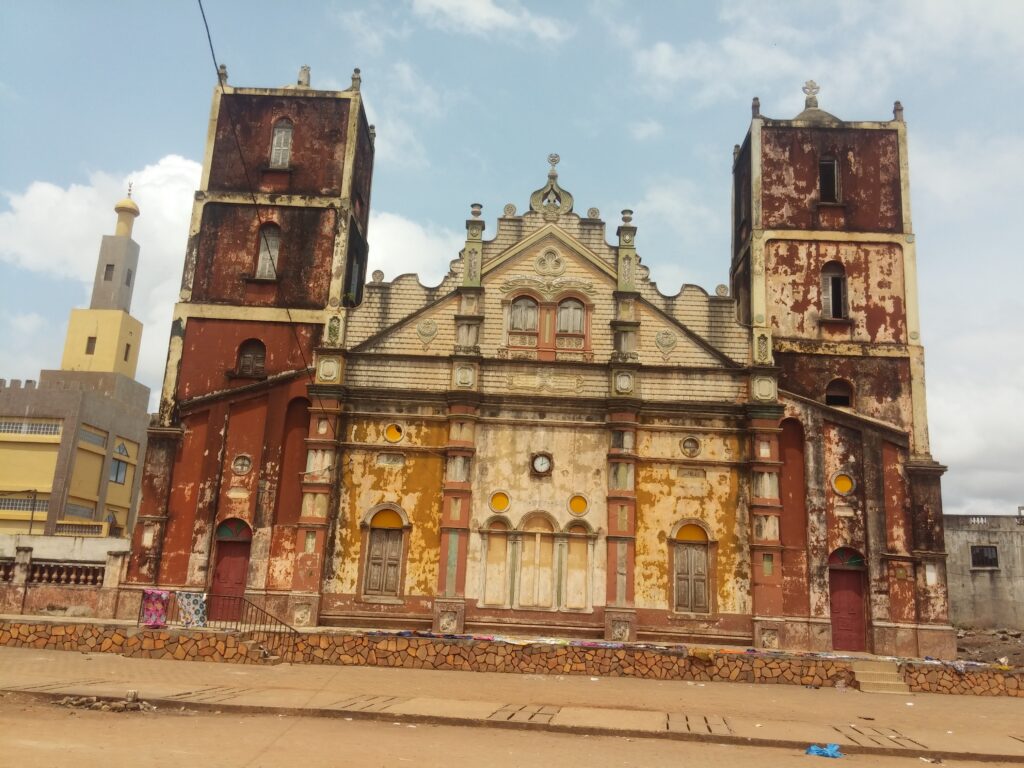
The Great Mosque of Porto-Novo bears witness to this: Muslim Afro-Brazilians built it in the early twentieth century, on the model of the churches of Bahia[3]. See Vodun and Islam and Vodun in the Americas.
A memory of the Atlantic
For me, the Aguda are above all a living memory of return. They show that the relationship between Africa and its diaspora outlived the moment the ships left the coast, and that African traditions crossed the Atlantic and went on evolving in the societies of the diaspora. That is also why Ouidah is such an important place for understanding the relationship between vodun, slavery, the African diaspora and the cultures of the Atlantic[1].
What we know, and how we know it
What comes from oral tradition
The stories of Aguda families are passed on within those families[1].
What comes from direct observation
The religious diversity of the Aguda, and reading them as a memory of return, come from my practice[1].
What is documented
The history of the Aguda and the building of the Great Mosque of Porto-Novo are established by researchers and the sources cited[2][3].
What is interpretation
Seeing in the Aguda a departure, a transformation and a return is a reading I defend[1].
What is still debated
The exact number of people who returned from Brazil varies between estimates[2].
Common misconceptions about the Aguda
Frequently asked questions
Who are the Aguda?
The Afro-Brazilian communities of the Gulf of Benin, descended from people who returned from Brazil in the nineteenth century.
Where does the word Aguda come from?
From Ajudá, the Portuguese name of Ouidah.
Do the Aguda practise vodun?
Only some: they were Catholic, Muslim or faithful to African traditions.
Where can the Aguda heritage be seen?
In Ouidah and Porto-Novo, in Afro-Brazilian architecture such as the Great Mosque of Porto-Novo.
Glossary
- Ajudá: the Portuguese name of Ouidah.
- Burrinha: a masked festival of Brazilian origin, among the Aguda.
Notes and references
[1] Direct observation and oral transmission, Wêtê Agbonon, bokonon, temple of Sakété.
[2] GURAN Milton, Agudás. Os « brasileiros » do Benim, Rio de Janeiro, Nova Fronteira, 1999.
[3] Wikipedia, « Grande mosquée de Porto-Novo », for its construction by Afro-Brazilians, in the style of the churches of Bahia. See (in French)
Sources
- GURAN Milton, Agudás. Os « brasileiros » do Benim, 1999.
- Direct observation and oral transmission, temple of Sakété, 1994–2026
Cite this entry
Wêtê Agbonon, « The Aguda », dans Vodun Bénin, l’encyclopédie du vaudou béninois, entry no. 070, updated on 25 November 2026. Online: https://vodunbenin.org/en/agudas/ (accessed on 26 November 2026). Licence CC BY 4.0.
- Last checked : 7 October 2026
- Reuse : free, with attribution, under the licence CC BY 4.0
- A mistake? Report it · Method and corrections