Allada is the former capital of the kingdom of Allada, called Ardra in European sources, the dominant kingdom of the region from the sixteenth to the eighteenth century, before its conquest by Dahomey. Cradle of the royal lineages of Abomey and Porto-Novo according to tradition, a town of many vodun temples and shrines, it is considered a holy city by Haitians.
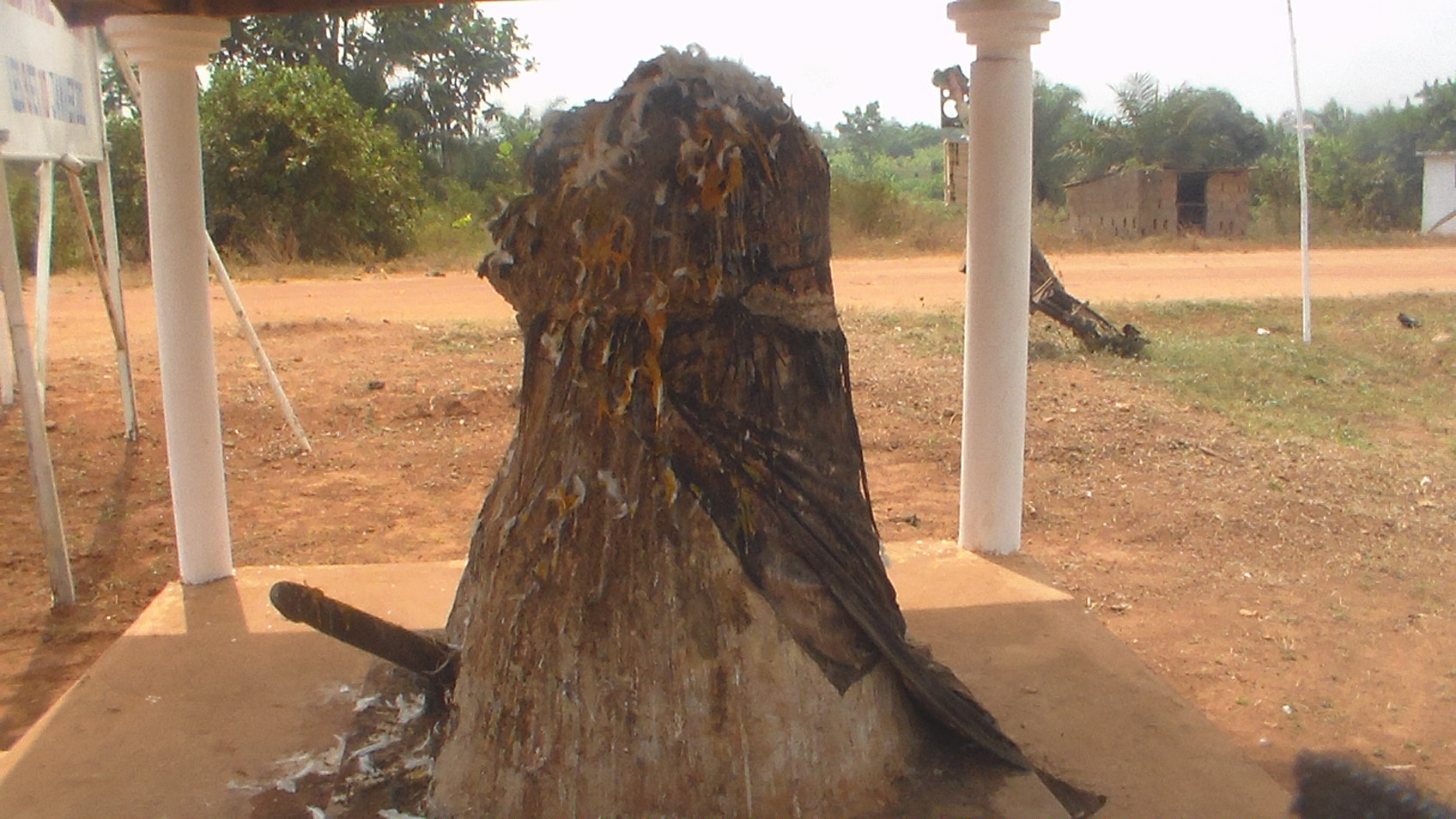
At the temple of Sakété, what Allada represents

Direct observationWêtê Agbonon, vodun priest and bokonon of the Fâ, at the temple of Sakété
Allada is one of the towns one absolutely must know to understand the history of vodun and of the old kingdoms of southern Benin. I would even say that no one can properly understand the birth and evolution of certain royal traditions of southern Benin without looking at Allada. The town was a major political, commercial and religious centre. For me, Allada represents a memory of foundation: a town where the history of peoples, royal lineages, migrations and cults meets that of relations with European and Atlantic powers[1].
Key points
- Allada was the capital of the dominant kingdom of its region, from the sixteenth to the eighteenth century.
- Tradition traces the royal lineages of Abomey and Porto-Novo to it.
- Allada is a place of memory, far more than a backdrop for pictures of vodun.
Vodun is also understood through the lands where families settled and the kingdoms built there[1].
The kingdom of Ardra
According to the Beninese government’s official presentation of Allada, the kingdom’s founding date is hard to fix; the first known mention seems to be a Portuguese map of 1539, which shows, near the kingdom of Benin, a place called Arida, linked to Allada. Tradition says the kingdom was founded by Adjahouto, who came from Tado with his family and followers, who mixed with the peoples settled before them. According to historians, the kingdom of Allada dominated its region from the sixteenth to the eighteenth century[2]. It was conquered by King Agaja of Dahomey in 1724, three years before the Hueda kingdom and its port, Ouidah[3]. The commune of Allada covers 381 square kilometres today, in the heart of the Atlantique department[2].
Allada, Abomey and Porto-Novo
Allada carries on a tradition shared with the kingdoms of Dahomey and Hogbonou, Porto-Novo, which according to tradition came from the same clan[2]. These three towns tell different stories, yet they are deeply linked. Allada is tied to an old royal tradition and to lineages that would play a considerable role in the history of southern Benin. Abomey then became the centre of the kingdom of Dahomey, with its own royal, political and religious history. Porto-Novo developed along another history, around Gun and Yoruba traditions, kingship and Atlantic exchanges. One should therefore avoid drawing too simple a line from Allada to Abomey and then to Porto-Novo: the history is more complex, with migrations, divided lineages, alliances, conflicts and political reshaping. Yet these towns share a common regional history[1].
| Town | What it carries | Entry |
|---|---|---|
| Allada | The founding memory of the royal lineages, the old kingdom of Ardra | This entry |
| Abomey | The kingship of Dahomey, its palaces and its cults | Abomey |
| Porto-Novo | The kingship of Hogbonou, Gun and Yoruba traditions | Porto-Novo |
A town of vodun
Allada is today a historic and religious town, with many vodun temples and shrines[2]. Vodun can never be entirely separated from the history of the societies that carried it: the kings had their cults, families their divinities, communities their shrines, and the ancestors their place. Migrations carried religious traditions with them, which is why the history of Allada is also a religious history. Tradition links Agassou, the leopard ancestor of the royal lineages, to Allada. Yet one must never turn the town into “the capital of vodun”: Beninese vodun never belonged to a single town. Allada, Abomey, Ouidah, Porto-Novo and Sakété each tell a different part of this history[1].
A holy city for Haiti
The town has raised a monument, at its northern exit on Toussaint-Louverture Square, to the hero of Haitian independence, whose family tradition links to Allada. For Haitians, Allada is a holy city[2]. The links also run through vodou: Agassou is honoured there as a lwa, a spirit who keeps the old traditions of Dahomey[4]. See Haitian vodou.
What visitors should know
When visiting Allada, I advise coming with more than the search for a spectacular ceremony, namely with another question: what does this town help me understand about the history of the peoples and traditions of Benin? Respect religious places, ask before photographing, and never treat a shrine as a tourist backdrop. Also accept that only part of it is shown: a place can be open to the public without all its rites being public. Vodun is understood through more than its ceremonies; one must also look at the lands where families settled, the kingdoms that were built, the ancestors whose memory is kept, and the traditions that crossed the generations. It is in this long history that the vodun take their meaning[1].
What we know, and how we know it
What comes from oral tradition
The founding of the kingdom by Adjahouto, who came from Tado, and the common origin of the royal lineages come from tradition[2].
What comes from direct observation
Allada as a memory of foundation, and the advice to visitors, come from my practice[1].
What is documented
The Portuguese map of 1539, the power of the kingdom, its conquest by Dahomey in 1724 and the monument to Toussaint Louverture are established by historians and official sources[2][3].
What is interpretation
Refusing too simple a line from Allada to Abomey and then to Porto-Novo is a reading I defend[1].
What is still debated
The kingdom’s founding date, and the exact links between the lineages, vary between sources[2].
Common misconceptions about Allada
- “Allada is the capital of vodun.” Beninese vodun never belonged to a single town[1].
- “History runs in a straight line from Allada to Abomey to Porto-Novo.” Migrations, alliances and conflicts made it far more complex[1].
- “A shrine open to the public shows all its rites.” A place can be open without all its rites being public[1].
Frequently asked questions
Where is Allada?
In the heart of the Atlantique department, in southern Benin, between Cotonou and Abomey.
What was the kingdom of Allada?
The kingdom of Ardra in European sources, the dominant power of its region from the sixteenth to the eighteenth century, conquered by Dahomey in 1724.
Who founded Allada?
According to tradition, Adjahouto, who came from Tado with his family and followers.
Why is Allada a holy city for Haitians?
Because tradition links Toussaint Louverture’s family to it, the town has raised him a monument, and Haitian vodou finds its roots there.
What is the link between Allada, Abomey and Porto-Novo?
According to tradition, their royal lineages came from the same clan, before each town followed its own history.
Glossary
- Adjahouto: the founder of the kingdom of Allada, according to tradition.
- Ardra: the name of Allada in old European sources.
- Hogbonou: the name of Porto-Novo and its kingdom.
- Tado: the town from which tradition brings the founders of Allada.
Notes and references
[1] Direct observation and oral transmission, Wêtê Agbonon, bokonon, temple of Sakété.
[2] Government of Benin, « Destination Bénin : Allada, cité d’Adjahouto, des origines à la modernité ». See (in French)
[3] LAW Robin, Ouidah: The Social History of a West African Slaving Port, 1727-1892, Athens (Ohio), Ohio University Press, 2004.
[4] Wikipedia, « Agassou », for the story of Princess Aligbonu and the leopard, the Agasuvi and the lwa of Haitian vodou. See
Sources
- Government of Benin, « Destination Bénin : Allada, cité d’Adjahouto ».
- LAW Robin, Ouidah, 2004.
- Direct observation and oral transmission, temple of Sakété, 1994–2026
Cite this entry
Wêtê Agbonon, « Allada », dans Vodun Bénin, l’encyclopédie du vaudou béninois, entry no. 037, updated on 25 November 2026. Online: https://vodunbenin.org/en/allada/ (accessed on 26 November 2026). Licence CC BY 4.0.
- Last checked : 7 October 2026
- Reuse : free, with attribution, under the licence CC BY 4.0
- A mistake? Report it · Method and corrections