Avlékété is a vodun of the sea, honoured on the coast of Benin, in Ouidah and in the towns of the coastline, and known as far as Badagry, in Nigeria, under the names Vlekete or Verekete. She is placed in the family of sea divinities led by Agbè. In Ouidah, she is associated with the Daagbo Hounon, the supreme chief of the town’s vodun worship. Her name is also that of a beach and a locality in the commune of Ouidah, now at the heart of a major tourism project[2][3][4].
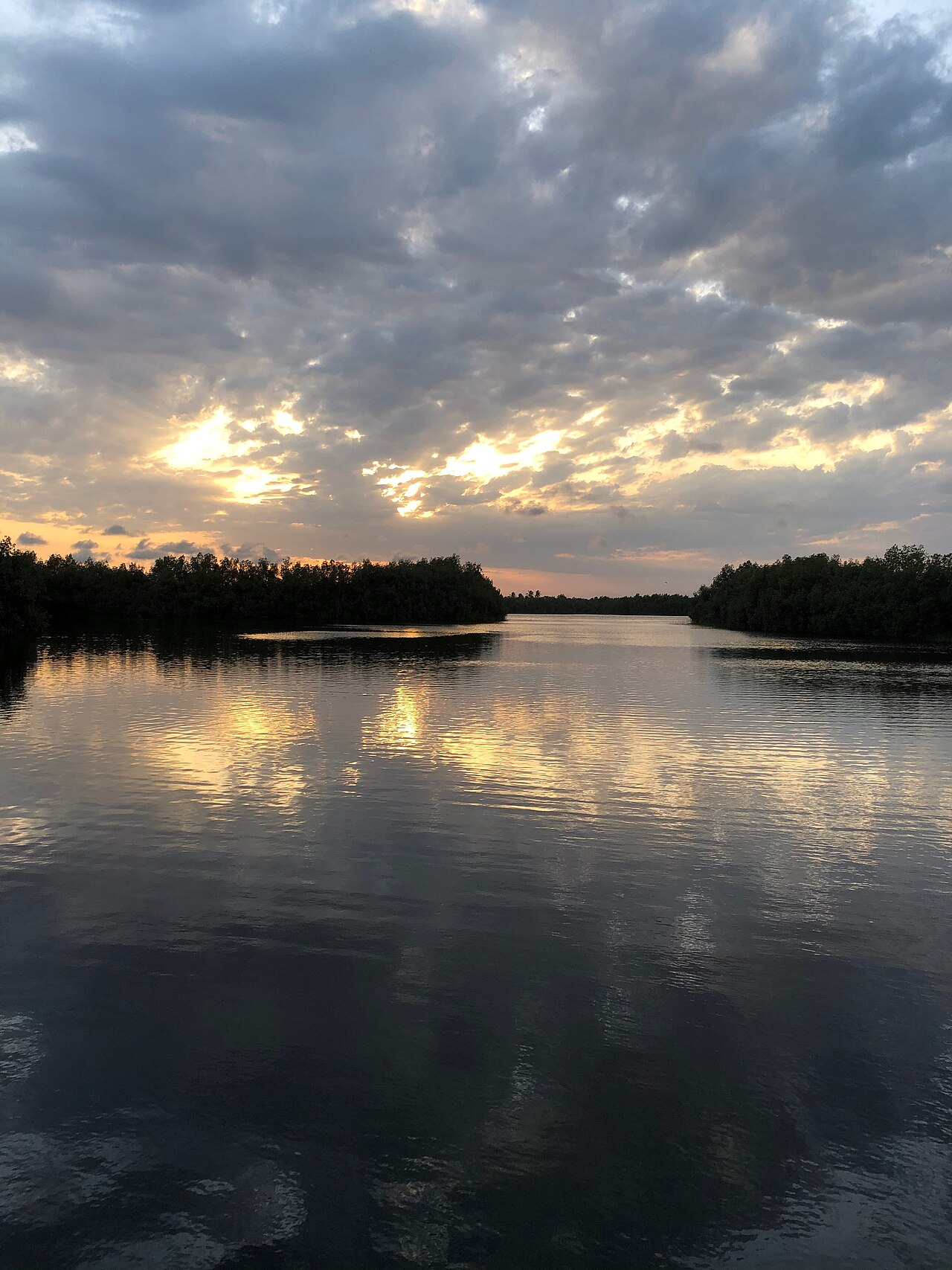
At the temple of Sakété, a divinity of the coast

Direct observationWêtê Agbonon, vodun priest and bokonon of the Fâ, at the temple of Sakété
My temple is in Sakété, on the plateau, far from the sea. Other vodun are honoured there, and those of the coast are respected as one respects the ancestors of another family: we greet them, and we make no claim to serve them. What I write here about Avlékété therefore comes from the tradition of the coast, as it is passed on, and from written sources, which I cite each time[1].
What every vodun priest knows, on the other hand, is the place of the sea. It carried away some of our ancestors during the slave trade, it feeds the fishermen, it receives offerings. The vodun who govern it are among the first of the coast[1]. See The Slave Route of Ouidah.
Key points
- Avlékété is a vodun of the sea, honoured on the coastline of Benin, notably in Ouidah[1][2].
- In the traditions of the coast, she belongs to the family of the vodun of the sea, whose chief is Agbè[1][5].
- In Ouidah, a presentation devoted to the Daagbo Hounon describes him as the high priest of Avlékété[2].
- Avlékété is also a locality in the commune of Ouidah, between the ocean and the lagoon, where the State is developing a seaside resort[4].
A divinity, a beach and a project therefore bear the same name: one has to know which of them one is talking about.
A divinity of the sea family
Vodun narratives arrange the divinities into great families. The American anthropologist Melville Herskovits, who did fieldwork in Danxomè in the 1930s, presents Agbè as the chief of the sea pantheon, born, with his twin, of Mawu and Lisa[5]. See Mawu-Lisa.
On the coast, Agbè is associated with his companion Naétè, and Avlékété is counted among the divinities of this family. She is often said to be the last-born, quick and close to people, the one who carries requests and answers between the sea and the land[1]. The stories vary from one place to another, and I report them here as they are told on the coast.
The boundary between water and land
In Ouidah, Avlékété is linked to the supreme authority of the cult. A presentation devoted to the Daagbo Hounon, supreme chief of the town’s vodun, describes him as the high priest of Avlékété, a divinity who commands the forces at the boundary between water and land. The same source reports that he presides over the ceremony on Avlékété beach during the vodun festival[2]. See The Benin voodoo festival.
This idea of a boundary speaks to anyone who knows vodun. The shore is a threshold, and thresholds are places where one asks, where one gives thanks, where one takes care. It is there that offerings intended for the sea are laid, and it is there that fishermen leave and return[1]. See Offerings and sacrifices.
From Ouidah to Badagry
The name of Avlékété travels all along the coast of the Gulf of Guinea. In Badagry, a coastal town in Nigeria close to Benin, a sea goddess called Vlekete or Verekete gave her name to a shrine and to a former slave market, the Vlekete market[3]. This circulation follows that of the peoples of the coast, of their fishermen and of their cults.
Avlékété, a place in the commune of Ouidah
Avlékété is also the name of a seaside locality in the commune of Ouidah, between the Atlantic Ocean and the Agouin lagoon[4]. Since 2019, the Beninese State has been preparing a seaside resort there[6]. In October 2021, the government signed two contracts with Club Med for a complex of about three hundred and thirty rooms, on nearly twenty-five hectares[4].
This project is changing the face of the beach. It makes it all the more necessary to recall that this name is that of a divinity, whose worship long predates the hotels[1].
In the diaspora
The figure crossed the Atlantic. The African American poet Audre Lorde gave the name Afrekete to one of the characters of her book “Zami: A New Spelling of My Name”, published in 1982, seeing in her a divinity from Danxomè[7]. See Vodun in the Americas.
Avlékété and the other waters
Vodun distinguishes several powers of water, which are often confused. The sea has its family, that of Agbè, in which Avlékété is placed. Lagoons, rivers and springs have their own vodun, often linked to a precise place. The Tohossou of Abomey are royal vodun associated with water, and Mami Wata is a figure of the waters known throughout the Gulf of Guinea, with her own history[1]. See The Tohossou and Mami Wata.
This distinction matters for the visitor. An offering laid on the beach, during a festival, is addressed to the sea and its vodun, whom the priests of the coast know how to name. It is to them that the question should be put, on the spot[1].
Offerings to the sea
On the coast, public offerings to the sea accompany the great festivals and the fishing season. They are led by the priests, at the water’s edge or at sea, before the community. Visitors may attend them when they are public; they take part only if they are invited[1]. See Offerings and sacrifices.
I give here neither the composition of the offerings nor the words that accompany them: they belong to the families of worship of the coast[1].
What we know, and how we know it
What comes from oral tradition
Avlékété’s place in the sea family, her character and her links with fishermen are passed on in the cults of the coast[1].
What is documented
Agbè’s role at the head of the sea pantheon, the cult of Vlekete in Badagry, the link between the Daagbo Hounon and Avlékété, and the seaside resort project are documented[2][3][4][5].
What is still debated
Avlékété’s parentage, her gender and her rank in the sea family vary according to places and families of worship. No single version prevails[1].
Common misconceptions about Avlékété
- “Avlékété is another name for Mami Wata.” They are two distinct figures of the waters, each with her own history. See Mami Wata[1].
- “Avlékété is just the name of a beach.” The beach bears the name of a sea divinity[2].
- “Avlékété belongs to Benin alone.” Her name is found all along the coast, as far as Badagry, and even in African American literature[3][7].
Frequently asked questions
Who is Avlékété in vodun?
A divinity of the sea, honoured on the coast of Benin, and placed in the family of the vodun of the sea whose chief is Agbè.
What is the link between Avlékété and the Daagbo Hounon?
In Ouidah, the Daagbo Hounon, supreme chief of vodun worship, is presented as the high priest of Avlékété.
Where is Avlékété?
It is also a locality in the commune of Ouidah, by the sea, between the ocean and the Agouin lagoon.
What is the Avlékété project?
A seaside resort prepared by the State since 2019, with a Club Med complex planned under contracts signed in 2021.
Glossary
- Daagbo Hounon: the title of the supreme chief of vodun worship in Ouidah.
- Agbè: the chief of the family of the vodun of the sea.
- Vlekete: the name of Avlékété in Badagry, Nigeria.
Notes and references
[1] Direct observation and oral transmission, Wêtê Agbonon, bokonon, temple of Sakété.
[2] Ouidah Origins, « Daagbo Hounon: Supreme Chief of Vodun in Ouidah, Benin ». See
[3] Wikipedia, « Velekete », after DIOKA L. C., Lagos and Its Environs, 2001, and FADIPE Ashamu Sewanu, Commerce d’esclaves et la civilisation occidentale à Badagry, 2000. See
[4] Government of Benin, « Aménagement de la station balnéaire d’exception d’Avlékété : le gouvernement signe deux contrats avec Club Med », 5 October 2021. See (in French)
[5] HERSKOVITS Melville J., « An Outline of Dahomean Religious Belief », Memoirs of the American Anthropological Association, no. 41, 1933, cited by Wikipedia, « Dahomean religion ». See
[6] Government of Benin, « Reconstruction de la cité historique de Ouidah et de la station balnéaire d’exception à Avlékété », 23 October 2019. See (in French)
[7] LORDE Audre, Zami: A New Spelling of My Name, Persephone Press, 1982.
Sources
- Ouidah Origins; Wikipedia; Herskovits, 1933; Government of Benin, 2021.
- Direct observation and oral transmission, temple of Sakété, from 1994 to 2026
Cite this entry
Wêtê Agbonon, « Avlékété », dans Vodun Bénin, l’encyclopédie du vaudou béninois, entry no. 075, updated on 27 November 2026. Online: https://vodunbenin.org/en/avlekete/ (accessed on 28 November 2026). Licence CC BY 4.0.
- Last checked : 14 October 2026
- Reuse : free, with attribution, under the licence CC BY 4.0
- A mistake? Report it · Method and corrections